
 EN
EN
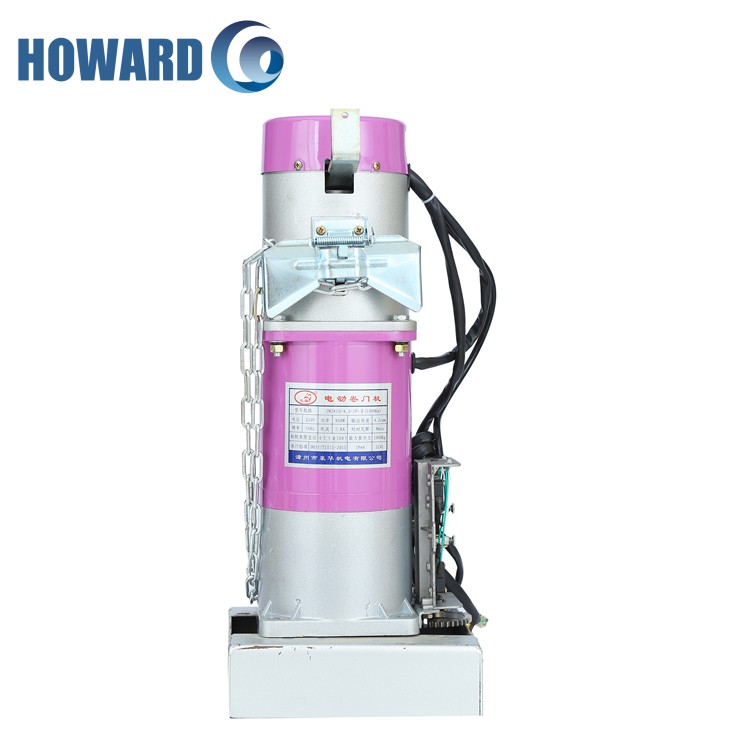
What Is Overload Protection in Rolling Door Motors?
Definition and Function of Overload Protection in Rolling Door Motor Systems
Rolling door motors come equipped with overload protection as a built-in safety feature designed to stop motor failures before they happen. The system keeps an eye on things like electrical current levels and temperature readings. If something goes wrong because maybe there's something blocking the door, the power supply becomes unstable, or the motor runs too long without rest, then the protection kicks in and cuts off power automatically. This helps save important parts inside the motor such as windings, gears, and those metal bearings we all know about. But it does more than just protect equipment. In factories and warehouses where these doors are used daily, this kind of protection actually lowers the risk of fires happening and means fewer unexpected shutdowns that disrupt business operations throughout the day.
The Role of Overload Relays and Thermal Cut-Offs in Motor Safety
Two key components manage overload protection:
- Overload relays cut power during sustained current spikes, such as when a door jams and strains the motor
- Thermal cut-offs trigger shutdowns when internal temperatures exceed safe limits, often due to environmental heat or faulty wiring
Together, these systems address both electrical overloads and thermal stress, providing comprehensive motor protection.
How Voltage Fluctuations Trigger Overload Responses
When the power supply drops below or rises above the standard range by more than 10%, rolling door motors tend to pull in significantly more electricity. This is actually pretty typical in buildings that aren't wired for modern demands. The extra current creates all sorts of heat problems inside the motor housing, which triggers those safety switches we call overload relays. Depending on how bad things get, these protective devices will kick in anywhere between two and fifteen seconds after detecting abnormal conditions. Newer equipment comes equipped with built-in memory banks that record every instance of this happening. Technicians can then look back at these records to figure out if there's something wrong with the local power grid, maybe the electrical wiring isn't big enough for what it needs to handle, or perhaps the motor itself just isn't running as efficiently as it should be anymore.
Extending Equipment Lifespan with Overload Protection
Reducing Mechanical and Electrical Wear Through Automatic Shutdown
Overload protection minimizes component degradation by cutting power during high-stress conditions. By halting operation before winding insulation breaks down or bearings overheat, it preserves motor integrity. A 2023 analysis of industrial door systems found that models with overload protection required 32% fewer gearbox replacements over five years compared to unprotected units.
Data Insight: Motors with Overload Protection Last Up to 40% Longer on Average
Industry data shows a clear link between overload safeguards and extended motor life:
| Protection Type | Average Lifespan (Cycles) | Maintenance Costs (5 Years) |
|---|---|---|
| With Overload Protection | 850,000 | $2,100 |
| Without Protection | 610,000 | $3,750 |
Electromechanical wear from repeated overloads accounts for the 39.3% lifespan advantage seen in protected motors (Industrial Motor Performance Report, 2023).
Balancing Upfront Costs with Long-Term Savings on Rolling Door Motor Replacement
Overload protected motors do come with a higher price tag right out of the box, usually around 15 to 20 percent extra compared to standard models. But what these motors save over time makes them worth considering seriously. Lifecycle studies show they cut down how often replacements are needed by roughly 43%. For facilities running machines 12 times or more each day, most find their money back within about 18 months because there's simply less downtime and fewer parts getting worn out faster than expected. Looking at things over ten years, each one of these special motors actually prevents 2 to 3 early replacements that would otherwise be necessary. Facility managers who want to think long term tend to see this as smart investment rather than just another expense.
Electrical and Thermal Hazard Prevention
Common Causes of Electrical Overload in Rolling Door Motor Circuits
Electrical overload risks arise from voltage spikes, phase imbalances in three-phase systems, and mechanical strain caused by misaligned tracks or damaged rollers. In industrial settings, dust accumulation can increase winding resistance by up to 15% (2023 Motor Efficiency Study), while frequent start-stop cycles accelerate insulation wear.
Mitigating Risks of Short Circuits, Phase Imbalances, and Overheating
Modern overload systems use layered defenses:
- Magnetic circuit breakers interrupt currents exceeding 110% of rated capacity instantly
- Thermal sensors monitor winding temperatures and initiate shutdown at 85°C (185°F), preventing 63% of insulation failures
- Phase monitoring relays correct imbalances within 0.5 seconds, reducing torque ripple by 40%
Facilities using combined thermal-electronic protection reported 72% fewer thermal incidents than those relying on single-mechanism setups (2024 warehouse door system analysis).
Thermal vs. Electronic Overload Protection: Which Is Better for Rolling Door Motors?
Thermal protectors use bimetallic strips that respond to gradual temperature increases, making them suitable for standard applications. Electronic systems employ microprocessors and current sensors for millisecond-level responses—ideal in environments with power fluctuations from welding equipment or elevators.
Industry data highlights performance differences:
| Protection Type | Average Response Time | Cost Premium | Failure Rate |
|---|---|---|---|
| Thermal | 8–12 seconds | 0% | 2.1% annually |
| Electronic | 0.05–0.2 seconds | 35% | 0.8% annually |
Electronic protection reduces contactor welding risks by 58% in cold storage facilities with frequent starts. However, thermal models remain popular in light industrial applications due to durability and minimal maintenance requirements.
Enhancing Safety for Users and Building Infrastructure
Preventing Fire Hazards Through Automatic Disconnection During Overloads
Overload protection serves as a critical fire prevention measure by cutting power when abnormal currents persist. Unlike basic circuit breakers, motor-specific systems distinguish between harmless surges and dangerous sustained overloads, minimizing false trips while maintaining safety. This prevents insulation breakdown and winding overheating—the leading causes of motor-related fires.
Reducing Strain on Door Mechanisms During Stall or Jam Conditions
Smart overload systems detect mechanical resistance within 0.5 seconds of a stall. By stopping torque output immediately, they prevent:
- Gearbox damage from torsional stress
- Track deformation due to forced movement
- Premature wear from belt or chain slippage
This responsive design lowers repair costs by 32% compared to motors without adaptive overload control (Industrial Door Safety Report, 2023).
Compliance With International Safety Standards (IEC, UL) in Rolling Door Motor Design
Top manufacturers design overload systems to meet IEC 60335-2-103 (2024) and UL 325 certifications. These standards require:
| Protection Feature | IEC Requirement | UL Requirement |
|---|---|---|
| Response Time | ±2 seconds at 150% load | ±3 seconds at 200% load |
| Thermal Reset Duration | 5-minute cooldown | 15-minute cycle |
Compliance ensures reliable safety performance and supports regulatory inspections, insurance validation, and liability mitigation.
Supporting Predictive Maintenance and System Monitoring
Real-time diagnostics and fault logging in smart rolling door motor systems
Advanced rolling door motors integrate sensors that continuously track current, temperature, and torque. This enables real-time diagnostics and automatic logging of overload events and voltage anomalies, creating a detailed maintenance history. Error codes mapped to specific components allow technicians to diagnose issues 62% faster (2023 automation industry benchmarks).
How overload feedback enables predictive maintenance strategies
Analyzing overload patterns—frequency, duration, and triggers—allows maintenance teams to:
- Replace bearings before friction leads to overloads
- Recalibrate controllers after repeated voltage-related trips
- Address gear wear before drive train failure occurs
This shift from time-based to condition-based maintenance reduces unplanned downtime by 38% in industrial applications.
Integration with building management systems for proactive alerts and uptime optimization
Modern motors connect to building automation platforms via MODBUS or BACnet, enabling intelligent responses:
| Alert Type | Action Initiated | Impact |
|---|---|---|
| Repeated overloads | Automatic torque adjustment | Prevents motor burnout |
| Temperature anomalies | HVAC sync for motor room cooling | Reduces thermal stress by 27% |
| Voltage instability | Power quality correction activation | Minimizes electrical system wear |
Facility managers receive prioritized alerts through centralized dashboards, supporting 99.4% operational availability in 24/7 warehouse operations.
FAQ
- What is overload protection in rolling door motors? Overload protection in rolling door motors is a safety feature designed to prevent motor failures by monitoring electrical current and temperature, automatically cutting off power during unexpected conditions.
- How does overload protection extend motor lifespan? Overload protection reduces mechanical and electrical wear by automatically shutting down the motor during high-stress conditions, thereby preserving the motor's components and extending their lifespan.
- Are electronic overload systems better than thermal ones? Electronic overload systems offer faster response times than thermal systems and are suited for environments with power fluctuations, though thermal models are popular for their durability in light industrial applications.
- What causes electrical overload in rolling door motors? Electrical overload can be caused by voltage spikes, phase imbalances, mechanical strain from misaligned tracks or damaged rollers, and frequent start-stop cycles.