
 EN
EN
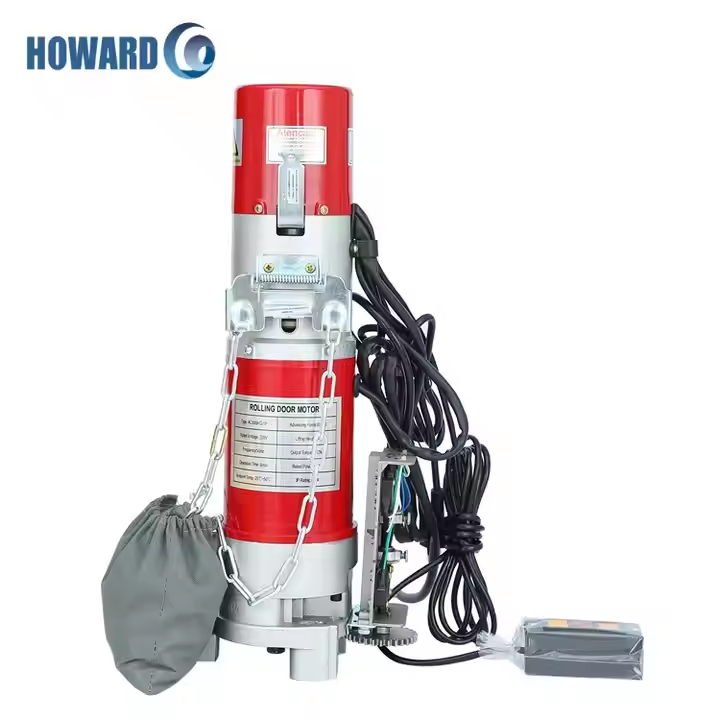
Core Functional Differences: Motion Design and Mechanical Integration
A roller door motor is engineered specifically for vertical rolling motion, converting rotational torque into a controlled lifting and lowering cycle via a drum and curtain assembly. In contrast, an ordinary door motor—used for swing or slide doors—delivers linear or pivoting motion, often through a chain, belt, or rack-and-pinion mechanism. This fundamental difference in motion design dictates the entire mechanical architecture. Roller door motors must accommodate continuous torsion loads as the curtain wraps and unwraps, requiring compact integration with the headshaft or drum. Ordinary door motors, by contrast, are typically mounted on brackets or in ceiling cavities, with no requirement to house a rolling barrel. As a result, roller door motor housing must fit within tight headroom and sideroom constraints while directly coupling to the door’s rotation axis. This space-constrained, drum-integrated design means a roller door motor cannot be swapped with a standard door motor without re-engineering the entire drive system.
Critical Roller Door Motor Specifications: Torque, Power Type, and Safety Compliance
Selecting a roller door motor requires attention to three interconnected factors: torque capacity, power type, and safety compliance. Each specification directly affects performance, durability, and legal conformity in Australian residential and light-commercial installations.
Torque Requirements: Why 40–120 Nm Defines Residential Roller Door Motor Performance
For standard residential roller doors, a torque range of 40–120 Nm covers most single- and double-car applications. The exact value depends on door weight, drum diameter, and spring balance. A motor rated at 40–60 Nm suits lightweight sheet doors up to 8 m², while 80–120 Nm handles heavier insulated panels or larger openings. Undersizing leads to premature wear, erratic travel, or motor cut-out; oversizing adds unnecessary cost and may stress the door structure. Always match the motor’s rated torque to the door’s calculated lifting requirement—including friction and balance efficiency.
AC vs DC Roller Door Motor Trade-offs: Efficiency, Noise, and Backup Readiness in Australian Conditions
Choosing between AC and DC roller door motors involves balancing efficiency against noise and backup capability. AC motors dominate older installations due to lower upfront cost and robust torque, but they draw more power and operate louder. DC motors offer quieter soft-start/stop cycles, consume up to 30% less energy, and integrate seamlessly with battery backup systems—critical during frequent Australian grid outages. However, DC motors typically cost more and may require additional control modules for full compliance. For new builds or retrofits in suburban areas where night-time noise is a concern, DC units are increasingly preferred. Importantly, a 240 V AC motor cannot run on a standard 12 V battery without an inverter, adding complexity and reducing reliability.
AS/NZS 4084:2023 Safety Mandates: Obstacle Detection, End-Stop Accuracy, and Photo-Eye Synchronization
Compliance with AS/NZS 4084:2023 is mandatory for all new roller door installations in Australia. The standard requires three core safety features in every roller door motor:
- Obstacle detection, triggering automatic reversal when resistance exceeds 20–30 N at the leading edge;
- End-stop accuracy, ensuring the motor stops within 10 mm of fully open and fully closed positions to prevent cable over-winding or panel damage;
- Photo-eye synchronization, requiring an infrared beam across the opening that, if interrupted during closing, forces immediate stop and reversal for at least one second.
Without these protections, installers risk voiding insurance and exposing occupants to serious crush hazards.
Physical and Installation Constraints Unique to Roller Door Motors
Roller door motors face distinct physical and installation challenges compared to traditional sectional door operators. Their tubular motor design integrates directly into the roller door drum—eliminating bulky ceiling-mounted components but imposing tight spatial requirements. Headroom clearance above the door must accommodate the drum diameter plus motor housing, typically requiring just 50–100 mm—critical for low-clearance farm sheds or carports. Similarly, sideroom constraints demand precise lateral alignment between motor mounts and wall brackets, as even minor misalignment risks torsion on the axle. This compact drum integration dictates specialised housing designs: sealed aluminium casings resist corrosion in coastal zones, while precisely engineered end caps maintain structural integrity under high torque loads. Unlike conventional motors with external rails, this self-contained approach trades accessibility for space optimisation—a defining trade-off across Australian roller door installations.
Headroom and Sideroom Limitations: How Compact Drum Integration Dictates Roller Door Motor Housing Design
The tubular motor's cylindrical form factor revolutionises spatial efficiency but imposes non-negotiable geometric boundaries. Headroom limitations stem from the drum diameter itself—typically 70–100 mm for residential doors—plus the motor's external housing thickness. Installers must verify clearance exceeds this combined measurement plus operational vibration margins. Sideroom constraints are equally critical: the motor requires rigid lateral support from wall-mounted brackets, demanding precise alignment with the drum's rotational axis. Deviation exceeding 2° can cause premature bearing wear or axle deflection. Consequently, motor housings incorporate tapered end caps and reinforced mounting flanges to distribute stress evenly across limited contact surfaces. This design paradigm prioritises minimalism over serviceability, making pre-installation measurement accuracy paramount for avoiding costly retrofits.
Top Australian Roller Door Motor Brands Compared for Reliability and Suitability
Merlin, B&D, Steel-Line, and Grifco: Real-World Performance of Their Dedicated Roller Door Motor Lines
Merlin, B&D, Steel-Line, and Grifco each offer dedicated roller door motor lines tailored to Australian residential and light-commercial conditions. Merlin motors are known for quiet DC operation and integrated backup compatibility—ideal for homes requiring overnight reliability. B&D motors pair robust torque with smart-home integration, though some models demand higher headroom. Steel-Line motors prioritise corrosion resistance, making them especially suitable for coastal environments. Grifco provides heavy-duty AC and budget-friendly DC options, balancing cost with service life. All four brands comply with AS/NZS 60335 (safety of household appliances) and AS/NZS 4084:2023 (roller door safety), but real-world suitability depends on door weight, usage frequency, and installation constraints—no single brand outperforms across every scenario.
FAQ Section
Can I use a standard door motor for roller doors?
No, roller door motors are designed specifically for vertical rolling motion and cannot be swapped with standard door motors without re-engineering the entire system due to differing mechanical architectures.
What torque range should I consider for residential roller doors?
A torque range of 40–120 Nm is recommended for residential roller doors. The specific torque depends on door weight, spring balance, and drum diameter.
Should I choose AC or DC roller door motors?
DC roller door motors are quieter, more energy-efficient, and integrate well with battery backup systems, making them a better choice for suburban areas or installations requiring reliability during power outages.
What safety features are required for roller door motors in Australia?
Compliance with AS/NZS 4084:2023 mandates obstacle detection, end-stop accuracy, and photo-eye synchronization for all roller door motor installations in Australia.
Which roller door motor brands are best in Australia?
Merlin, B&D, Steel-Line, and Grifco offer reliable roller door motors tailored to Australian conditions, but the best choice depends on your specific installation requirements.
Table of Contents
- Core Functional Differences: Motion Design and Mechanical Integration
- Critical Roller Door Motor Specifications: Torque, Power Type, and Safety Compliance
- Physical and Installation Constraints Unique to Roller Door Motors
- Top Australian Roller Door Motor Brands Compared for Reliability and Suitability
- FAQ Section