
 EN
EN
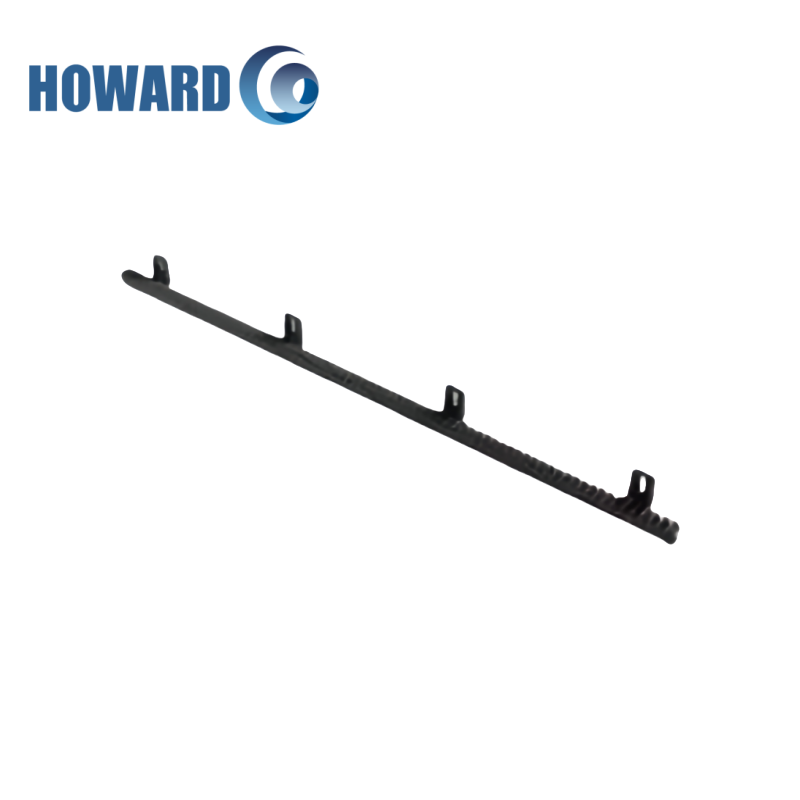
Unmatched Durability and Corrosion Resistance for High-Demand Environments
Industrial facilities face relentless wear from moisture, chemicals, and heavy impacts. Nylon-coated racks deliver critical protection where metal alternatives fail—withstanding daily abrasion and resisting rust in demanding settings like manufacturing plants and warehouses.
How Nylon Coating Withstands Abrasion, Moisture, and Chemical Exposure (UL 969 & ISO 1456 Verified)
The engineered polymer coating creates a non-reactive barrier that outperforms bare metal. Verified to UL 969 and ISO 1456 standards, it prevents chemical degradation from acids, solvents, and oils; blocks moisture penetration that causes rust and structural weakening; and resists surface abrasion from repetitive loading cycles.
Laboratory testing shows nylon-coated components maintain integrity after 10,000+ impact cycles. Unlike metals, they won’t spark or corrode when exposed to industrial cleaners. Manufacturers report 50% fewer replacements in corrosive environments after switching to nylon racks—backed by the NACE IMPACT Study (2023), which found nylon reduces corrosion-related costs by 90%.
Total Cost of Ownership Advantage: Nylon Rack vs. Stainless Steel and Chrome-Plated Alternatives Over 5 Years
Nylon storage systems deliver dramatic savings through extended service life and minimal maintenance:
| Cost Factor | Nylon Rack | Stainless Steel | Chrome-Plated |
|---|---|---|---|
| Replacement Cycle | 10+ years | 5–7 years | 3–4 years |
| Corrosion Resistance | High (no oxidation) | Moderate (pitting risk) | Low (coating chips) |
| Annual Maintenance | Wipe-clean surface | Anti-rust treatments | Re-plating needed |
Businesses save an estimated $740k over five years by avoiding premature replacements and maintenance labor—driven primarily by nylon’s resistance to environmental degradation and elimination of recurring surface refurbishment.
Enhanced Product Protection — Preventing Damage to Sensitive Inventory
Impact-Absorbing Cushioning and Non-Marring Surface Performance for Electronics, Glass, and Precision Parts
Items that need special care like circuit boards, optical lenses, and those finely tuned measuring tools demand storage solutions that won't scratch or mar their surfaces. Nylon rack systems work wonders here because they absorb impacts better than metal options. Tests show these nylon racks can handle about 30 percent more shock when something bumps into them accidentally. The soft polymer material doesn't leave behind those tiny scratches we all hate seeing, especially on things with delicate anodized coatings or shiny glass parts that catch the light just right.
This dual-protection is critical for:
- Electronics: Preventing static discharge and connector damage
- Glass components: Avoiding stress fractures from point impacts
- Precision parts: Maintaining micrometer-level tolerances by eliminating surface deformation
Rigid metal storage racks tend to pass along all that impact force straight to whatever's sitting on them when there's a forklift mishap or something gets dropped accidentally. Nylon works differently because of how it absorbs shocks rather than transferring them. The material doesn't let dust and debris stick to it like metal does, so those tiny particles that gradually wear things down just don't build up over time. When looking at actual warehouse operations, this matters a lot. A study from Packaging Science Quarterly found that companies using nylon containers saw about 19% fewer quality issues related to damaged parts. Plus products last longer overall since they aren't getting those little cracks we can't even see forming every time they're handled.
Flexible, Scalable Configurations Designed for Real-World Operational Needs
Modular Stationary, Mobile, and Expandable Nylon Rack Systems — Matching Layouts, Workflows, and Growth Plans
Storage needs in today's warehouses are constantly changing, so having adaptable solutions becomes essential for keeping operations running smoothly. Nylon rack systems offer something special when it comes to flexibility thanks to their modular design. These racks can be rearranged quickly within minutes and don't need any fancy tools either, which makes them perfect for businesses dealing with busy seasons or expanding product lines. Compared to traditional metal options that are pretty much stuck once installed, nylon racks are lighter but still tough enough to handle regular wear and tear. What sets them apart is how easily they switch from being fixed in place to rolling around on those built-in casters. Warehouse managers find this feature incredibly useful when they need to adjust layouts based on where materials actually move throughout the day.
Scalability really works well with lean manufacturing approaches. Facilities often start small with just one level of storage and then grow vertically to four levels as their inventory increases, which saves money on buying too much equipment upfront. Studies looking at how materials are handled have found that places with modular storage systems can rearrange things about 30% quicker than those stuck with welded racks. This means less time lost when adjusting workflows for better performance. Nylon's non-conductive nature makes it safe to place these storage solutions right next to areas where delicate electronic parts are assembled. Plus, the surfaces absorb impacts so tiny damages don't happen to expensive components during transportation. With standardized connectors everywhere, companies can extend aisles infinitely or adapt for cross docking needs. What this delivers is genuine future proofing where storage grows exactly as needed without sacrificing easy access heights that workers need for good ergonomics.
Low-Effort Maintenance and Sustainable Long-Term Reliability
Nylon storage racks cut down on all those problems that come with metal options like rusting, constant need for paint jobs, and surfaces wearing away over time. Maintenance takes way less work too – around 70% less if we're comparing to old fashioned steel racks. The surfaces don't absorb chemicals or collect dust and grime either, so regular wiping keeps them working just fine without needing fancy cleaners. Because nylon doesn't react with most substances, these racks stay stable for years longer than their metal counterparts. That means fewer replacements needed which saves money in the long run while also cutting down on the amount of waste going into landfills from discarded equipment.
Businesses gain operational consistency with near-zero upkeep demands—freeing teams to focus on core workflows rather than equipment servicing. The intrinsic durability also advances sustainability goals: a single nylon rack outlasts three generations of powder-coated steel equivalents, slashing resource consumption and landfill contributions by over 60%.
Table: Maintenance Comparison (5-Year Horizon)
| Factor | Nylon Rack | Steel Rack |
|---|---|---|
| Annual Cleaning Time | 2 hours | 15 hours |
| Refinishing Needs | None | 2 cycles |
| Failure Rate | <3% | 22% |
| Lifetime (Years) | 20+ | 6–8 |
This lifecycle resilience transforms storage from a recurring expense into a strategic asset—ideal for facilities prioritizing reliability, uptime, and eco-efficiency.
FAQ Section
Why choose nylon-coated racks over metal alternatives?
Nylon-coated racks offer unmatched durability and corrosion resistance, particularly in high-demand environments like industrial facilities. They withstand moisture, chemicals, and impacts better than metal options, reducing maintenance and replacement costs.
How do nylon racks compare to stainless steel and chrome-plated alternatives?
Nylon racks boast a longer replacement cycle and higher corrosion resistance while requiring minimal maintenance. Over five years, they offer substantial cost savings compared to stainless steel and chrome-plated racks.
Are nylon racks suitable for sensitive inventory like electronics and glass?
Yes, nylon racks provide impact-absorbing cushioning and non-marring surface performance, making them ideal for storing delicate items like electronics, glass, and precision parts.
What makes nylon racks a sustainable storage solution?
Nylon racks require minimal maintenance and boast long-term reliability, reducing waste and environmental impact. They last significantly longer than metal options, contributing to sustainability goals.