
 EN
EN
How Sliding Gate Operators Handle Wide Entrances
Mechanical Design Considerations for Wide Gate Spans
When dealing with sliding gates that cover wide openings, proper engineering becomes absolutely essential because these structures have to handle much heavier loads than smaller installations. For those big entrance areas spanning between twenty to forty feet or more, manufacturers typically reinforce the frames using either aluminum or steel construction materials while incorporating dual drive motors usually operating at voltages ranging from 24V to 48V DC power supply. The folks at Gate Automation Standards Consortium ran some tests recently and found out something interesting about performance differences. Their research shows that when operators are rated for capacities between six hundred to one thousand two hundred pounds, they actually cut down on sideways movement issues by almost 38% for any gate installation exceeding thirty feet in length compared to what we see with regular models on the market today.
Key design factors:
- Cantilevered track systems eliminate ground friction for gates up to 45 feet
- Self-lubricating nylon rollers minimize wear on spans exceeding 35 feet
- Counterweight mechanisms balance gates with uneven weight distribution
The Relationship Between Gate Length, Weight, and Operator Capacity
Most operators stick to a safety margin where the motor capacity is about 1.2 times the actual gate weight. So if someone has a gate weighing around 1000 pounds, they need at least a 1200 pound capacity motor to stay safe. For bigger commercial setups, people generally go with AC motors ranging from 2 to 5 horsepower when dealing with gates longer than 25 feet. Residential properties with smaller gates, usually under 20 feet long, tend to work better with DC motors that fall somewhere between three quarters and 1.5 horsepower. Coastal regions present special challenges because wind can really affect things. The extra force from constant wind exposure actually bumps up the torque requirements anywhere from 15% to as much as 25%, so folks in these areas need to account for that when selecting their equipment.
| Gate Length | Material | Recommended Motor |
|---|---|---|
| 15–20 ft | Aluminum | 24V DC (1 HP) |
| 25–35 ft | Wrought Iron | 48V DC (3 HP) |
| 35–45 ft | Steel | 120V AC (5 HP) |
Role of Track Systems and Support Structures in Stability
Stability in wide spans depends on high-grade galvanized steel tracks supported by 12–16 roller carriages. For gates over 30 feet:
- Embedded I-beam tracks transfer load directly into concrete footings
- Dual V-guide wheels maintain alignment within ±1/8 inch
- Polyurethane seals protect bearings from debris and moisture
In industrial settings, concrete-encased track beds reduce ground movement effects by 72%. Integrated laser alignment sensors detect deviations greater than 0.5°, enabling automatic corrections that preserve smooth operation in high-traffic environments.
Motor Power and Torque Requirements for Heavy-Duty Performance
Evaluating Horsepower and Torque Based on Gate Dimensions
Proper motor sizing is critical—commercial sliding gate operators need 1.5–3× more torque than residential units (GSA Access Control Report 2023). A 20-foot steel gate weighing 1,200 lbs generally requires a ½ HP motor producing 1,800 lb-ft of torque, while 30-foot commercial gates often demand 1 HP motors delivering 3,500 lb-ft. Engineers assess three key variables:
- Linear weight distribution per foot
- Maximum wind load resistance
- Friction levels in roller and track systems
Matching Motor Specifications to Residential vs. Commercial Needs
| Requirement | Residential (12–20 ft gates) | Commercial (25–40 ft gates) |
|---|---|---|
| Motor Power | 1/4–3/4 HP | 1–3 HP |
| Torque Output | 900–2,200 lb-ft | 2,500–6,000 lb-ft |
| Duty Cycle | 50–100 daily operations | 200–500 daily operations |
| Weather Resistance | IP44-rated | IP66-rated |
Case Study: High-Torque Operators in Large-Scale Applications
A Midwest logistics hub installed 38-foot cantilever gates powered by 2.5 HP motors with 5,200 lb-ft torque, maintaining 98% reliability across extreme temperatures (-20°F to 100°F) over 12 months. This upgrade reduced mechanical failures by 72% compared to previously undersized units (Facility Management Quarterly 2024).
Durability and Weather Resistance for Long-Term Reliability
Commercial-grade sliding gate operators must endure decades of environmental stress. Units serving high-cycle environments—especially in coastal or industrial zones—require robust construction to ensure uninterrupted performance.
Heavy-Duty Construction Materials and Corrosion Resistance
Core components include galvanized steel gears and marine-grade aluminum frames. Stainless steel fasteners and powder-coated finishes resist saltwater corrosion, with accelerated aging tests showing 85% less degradation over simulated 10-year periods compared to standard materials.
Weatherproofing for Reliable Outdoor Performance
IP66-rated motor housings and sealed electrical conduits prevent water ingress during heavy rain. Control boards are protected with conformal coating to resist condensation, while UV-stabilized polymers retain integrity across extreme temperatures (-40°F to 158°F).
Performance Under Frequent Use and High-Traffic Environments
Heavy-duty operators feature hardened steel roller bearings and dual-lip track seals to support 150+ daily cycles. Thermal-protected motors sustain consistent torque during 12-hour operations, with industrial models retaining 92% efficiency after 500,000 test cycles—equivalent to two decades of typical residential use.
Smooth Operation Technologies: Soft Start/Stop and Speed Control
Engineering Behind Seamless Gate Automation
Modern sliding gate operators employ precisely calibrated acceleration profiles to ensure smooth motion across wide spans. Real-time control algorithms monitor motor load and adjust torque dynamically, compensating for wind resistance or thermal expansion in the track system (IEEE Mechatronics Journal 2023). This prevents damaging jerks, especially in gates exceeding 40 feet.
Benefits of Adjustable Speed Settings for Safety and Control
Operators offer customizable speed profiles (3–18 ft/min), allowing slower speeds near schools or hospitals and faster cycles in industrial zones. Additional features include:
- Dynamic braking to prevent overshooting in high winds
- Emergency reversal activation within 0.5 seconds of obstacle detection
Soft Start/Stop Technology to Minimize Mechanical Stress
Gradual ramp-up reduces peak current draw by 60%, significantly extending motor life. By eliminating abrupt starts:
- Gearbox wear drops by 45% (Material Durability Report 2023)
- Chain or belt replacements are needed 30% less often
- Track alignment remains stable beyond 50,000 cycles
These technologies enable sliding gate operator systems to move 1,500 lb gates with less than a 1 dB increase in noise during acceleration.
Selection, Installation, and Maintenance Best Practices
Choosing the right sliding gate operator by application and size
Picking the right gate operator means looking at several factors first. Gate size matters a lot obviously, how often it gets used, and what kind of application we're talking about here. Most homes with gates less than 30 feet long and not too much traffic can get away with half horsepower models just fine. But when dealing with commercial properties where gates stretch over 40 feet or need opening multiple times throughout the day, then bigger motors become necessary. These situations usually call for 1 to 2 horsepower units equipped with stronger gears inside. The industry standard suggests going for something that can handle about 150 percent of whatever the gate actually weighs, plus all those extra bits attached to it like fences or signs hanging around. Wind pressure builds up over time too so better safe than sorry. Most companies break their offerings down into two basic categories these days: light duty stuff rated for up to 800 pounds, and heavy duty options handling anything over 1,200 pounds. Makes things easier for folks trying to figure out which one fits their needs without getting bogged down in specs.
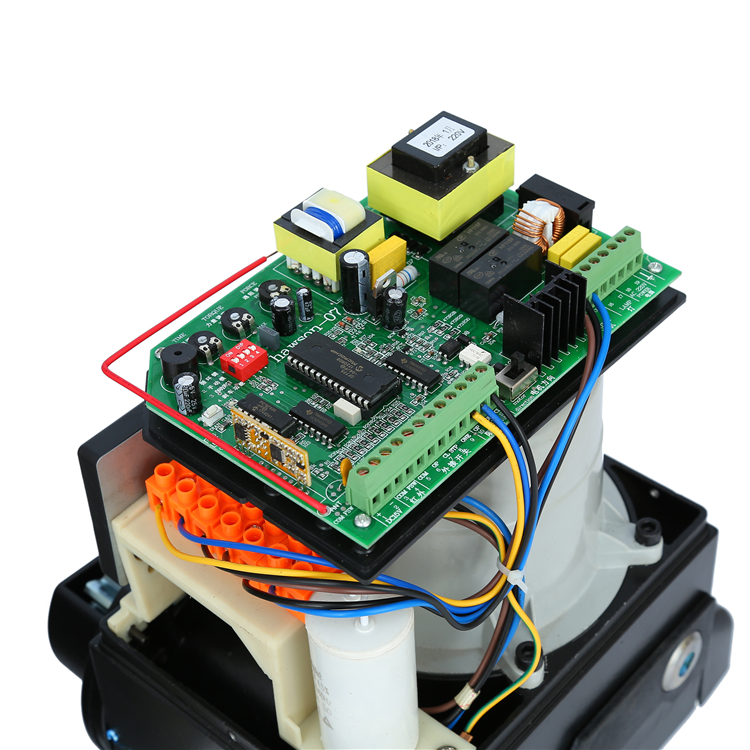
Key components: Motor, gearbox, control board, and safety sensors
Reliable automation relies on four core subsystems:
- Brushless DC motors (2,000–6,000 RPM) with thermal overload protection
- Helical or worm-drive gearboxes (15:1 to 25:1 reduction ratios) for torque amplification
- Programmable control boards with soft start/stop and auto-reverse functions
- Infrared sensors and edge detectors (minimum 6" clearance) for obstruction detection
A 2023 service analysis found that 72% of early failures resulted from undersized motors or misaligned safety sensors, highlighting the importance of proper component integration.
Routine maintenance and troubleshooting for optimal longevity
Follow a biannual maintenance schedule:
- Lubricate roller bearings and gear teeth with lithium-based grease
- Tighten mounting brackets and track bolts to 18–22 ft-lbs torque
- Test safety sensor alignment and response monthly
- Inspect limit switches seasonally to prevent overtravel
Common issues can be diagnosed efficiently:
- Gate stuttering: Check for voltage below 10.5V or worn gear teeth
- False reverses: Clean optical sensors and recalibrate sensitivity
- Motor overheating: Verify amp draw is within ±10% of rated capacity
Systems maintained according to these practices last 40% longer than neglected units, based on 5-year municipal field data.
FAQs
What materials are best for sliding gate operators?
Aluminum and steel are commonly used materials for sliding gate operators due to their durability and ability to handle heavy loads.
How do weather conditions affect sliding gate operators?
In areas with high wind exposure or coastal regions, torque requirements are increased by 15%-25% to handle constant wind pressure.
What is the recommended maintenance schedule for sliding gate operators?
It's recommended to follow a biannual maintenance schedule that includes lubrication and checking the torque of track bolts.
What are the benefits of soft start/stop technology?
Soft start/stop technology minimizes mechanical stress by reducing peak current draw, which extends motor life and decreases gearbox wear.