
 EN
EN
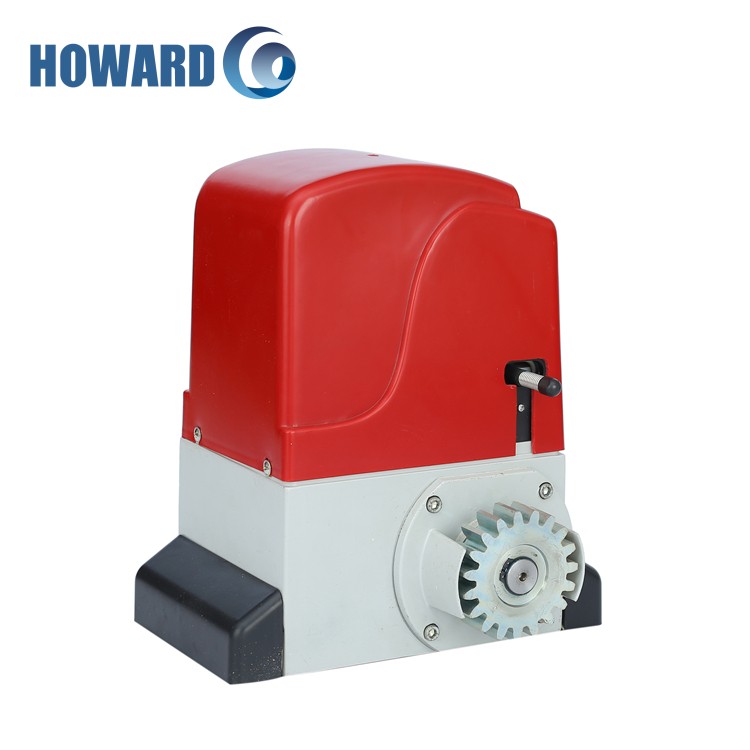
Why Magnetic Limit Switches Are Critical for Modern Sliding Gate Operators
Eliminating Mechanical Wear: How Non-Contact Sensing Boosts Long-Term Reliability
Traditional mechanical limit switches rely on physical contact to detect gate positions—introducing friction, wear, and eventual failure. Magnetic limit switches eliminate this vulnerability with contactless Hall effect sensing, removing the primary cause of misalignment, motor overload, and premature system degradation. Field data shows non-contact systems extend operational lifespan by 3.8× compared to mechanical equivalents—directly reducing part replacements, service interventions, and unplanned downtime. For high-traffic commercial gates, this reliability is foundational to safety, access continuity, and long-term cost control.
Hall Effect Fundamentals: Accurate, Repeatable Position Detection in Harsh Environments
Hall effect sensors detect gate position by measuring changes in magnetic fields—not physical actuation—delivering ±1mm accuracy across extreme conditions. Unlike mechanical switches prone to ice jamming, dust clogging, or corrosion, solid-state Hall sensors operate reliably from –40°C to 85°C. Industrial testing confirms 99.97% detection repeatability over 500,000 cycles—ensuring gates stop precisely at programmed limits every time, preventing collisions, property damage, and safety incidents.
Seamless Integration of Magnetic Limit Switches into Existing Sliding Gate Operators
Compatibility Checklist: Voltage, Signal Type, and Mounting Requirements
Retrofitting magnetic limit switches requires three key verifications:
- Voltage compatibility: Match sensor output (e.g., 12V DC or 24V AC) to the operator’s control board specifications.
- Signal type alignment: Digital outputs (NPN/PNP) integrate seamlessly with modern controllers; analog variants require voltage-matched receivers.
- Mounting precision: Install rigid brackets within 5–10mm of the magnet’s travel path. Even minor misalignment degrades signal consistency and positional fidelity.
IP67-Rated Sensors and Real-World Deployment Best Practices
IP67-rated magnetic limit switches are engineered for outdoor resilience—fully sealed against dust ingress and temporary submersion. To maximize performance, mount sensors away from high-pressure spray zones and large metal structures that distort magnetic fields. Route wiring through UV-resistant conduit and apply dielectric grease to all connectors. Field data shows IP67-rated units reduce weather-related failures by 89% compared to unsealed alternatives—making them essential for reliable year-round operation.
Magnetic vs. Mechanical Limit Switches: A Data-Driven Performance Comparison for Sliding Gate Operators
The choice between magnetic and mechanical limit switches directly shapes reliability, maintenance burden, and total cost of ownership. Mechanical designs depend on physical actuation—accelerating wear in high-cycle or harsh environments like dust, moisture, or temperature swings. Magnetic switches bypass this limitation entirely, using Hall effect technology to sense position without contact.
| Performance Metric | Mechanical Limit Switches | Magnetic Limit Switches |
|---|---|---|
| Operational Principle | Physical actuator contact | Magnetic field sensing (non-contact) |
| Wear & Maintenance | High wear; quarterly maintenance typical | Near-zero wear; minimal upkeep |
| Environmental Tolerance | Vulnerable to dust/moisture | IP67-rated (dustproof/water-resistant) |
| Lifespan | 2–5 years (contact erosion) | 10+ years (no moving parts) |
| Failure Rate | 70% higher in high-cycled installations | 32% lower industry average |
While mechanical switches carry a lower initial price, magnetic alternatives cut long-term costs by 40–60%—driven by extended service intervals, fewer component replacements, and near-elimination of weather- or cycle-induced failures. For sliding gate operators demanding precision, durability, and predictable performance, magnetic technology delivers clear, quantifiable ROI.
Real-World ROI: Reduced Downtime, Lower Maintenance, and Extended Sliding Gate Operator Lifespan
Field Evidence: 32% Fewer Service Calls and 5.2× Higher MTBF After Retrofitting
Real-world deployments confirm compelling gains after upgrading to magnetic limit switches: facilities report a 32% reduction in service calls and a 5.2× increase in MTBF (Mean Time Between Failures). This leap in reliability stems directly from eliminating contact-based wear—especially critical in applications with hundreds of daily cycles. Labor hours and spare-part usage drop significantly: industrial sites see 25% fewer annual component replacements, while harsh-environment installations experience 30% less weather-related downtime. With full ROI typically achieved within 18 months—and extended operator lifespans delaying capital replacement—the upgrade strengthens both operational continuity and financial performance across commercial, institutional, and residential settings.
FAQ
1. What are magnetic limit switches?
Magnetic limit switches are sensors that detect gate position using non-contact Hall effect technology to measure changes in magnetic fields.
2. How do magnetic limit switches differ from mechanical limit switches?
Unlike mechanical switches, magnetic limit switches do not rely on physical contact, which eliminates friction and wear, offering higher reliability and extended lifespan.
3. Are magnetic limit switches weather-resistant?
Yes, most magnetic limit switches are IP67-rated, meaning they are dustproof and water-resistant for reliable outdoor use.
4. Can magnetic limit switches be retrofitted into existing gate operators?
Yes, with proper voltage compatibility, signal alignment, and precision mounting, magnetic limit switches can integrate well into existing sliding gate operators.
5. How do magnetic limit switches improve gate reliability?
By eliminating mechanical contact, magnetic limit switches reduce wear, misalignment, and weather-related failures, boosting overall gate reliability and lowering maintenance costs.