
 EN
EN
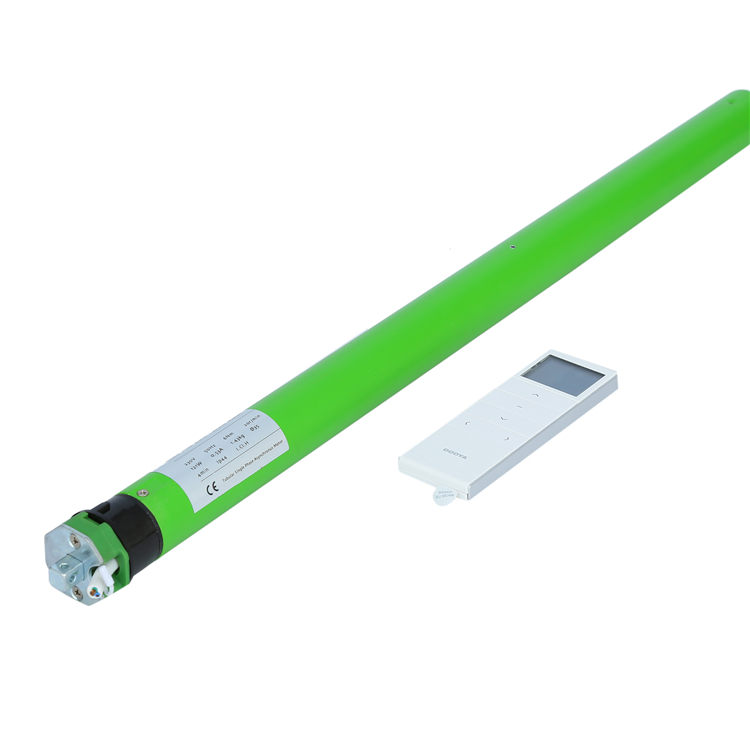
How Remote Control Transforms Tubular Motor Operation
RF vs. IR vs. Wired: Why RF Remote Control Is the Standard for Modern Tubular Motors
Wired controls restrict placement options and complicate installation, while infrared (IR) remotes demand unobstructed line-of-sight and lose reliability beyond 10 meters. Radio frequency (RF) technology has become the industry standard—penetrating walls, operating reliably at ranges exceeding 100 meters, and maintaining stable connections despite furniture, curtains, or structural barriers. RF avoids interference from common household electronics and enables bidirectional communication, allowing users to confirm shade position remotely. This robustness is why 78% of smart shade manufacturers now default to RF protocols (Smart Home Tech Report 2024).
Pairing, Range, and Multi-Motor Management via Universal Remote Systems
Universal RF remotes streamline tubular motor control through intuitive, one-button pairing. Once synced, a single remote manages multiple motors across rooms without signal conflict. Key capabilities include:
- Extended range: Consistent outdoor operation up to 150 meters
- Group controls: Synchronize 15+ shades with one command—e.g., “evening close”
- Scene programming: Store sunrise/sunset schedules directly in the remote
Commercial deployments use this scalability for coordinated hotel blackout systems, while homeowners gain clutter-free control. Some advanced models integrate humidity sensors to auto-close shades during rain—adding environmental responsiveness without extra hardware.
Timer Function Integration for Automated Shade Scheduling
Built-in Timer Accuracy, Power Efficiency, and Fail-Safe Position Memory
Modern tubular motors achieve ±30-second daily timing accuracy using quartz-controlled mechanisms—ensuring shades move precisely when scheduled. This precision supports energy efficiency: by aligning shade deployment with peak solar heat gain, automated scheduling reduces HVAC load and can cut cooling costs by up to 25% in sun-exposed rooms. Integrated capacitor banks provide up to 72 hours of backup power during outages, preserving fail-safe position memory that defaults shades to a safe open state—preventing entrapment or mechanical stress. Unlike basic timers, these systems use astronomical clocks for automatic seasonal calibration, eliminating manual adjustments.
Residential Routines vs. Commercial Timed Schedules
| Application Type | Key Scheduling Features | Primary Use Cases |
|---|---|---|
| Residential | Sunrise/sunset alignment, vacation modes | Privacy routines, UV protection, energy savings |
| Commercial | Multi-zone sequencing, holiday overrides | Daylight harvesting, security compliance |
Residential setups emphasize simplicity—sunset-triggered closures for privacy, sunrise openings for natural wake-up lighting. Commercial environments require granular coordination: office buildings stagger shade movements across façades to balance glare control and daylight utilization; retail spaces time window reveals for optimal product visibility. Both leverage programmable logic to override schedules during high winds or extreme weather—protecting external shading from damage.
Smart Ecosystem Compatibility: Extending Tubular Motor Control Beyond Standalone Remotes
Z-Wave, Matter, and Home Assistant Integration for Unified Smart Home Control
Today’s tubular motors integrate natively with open platforms like Home Assistant and interoperability standards including Z-Wave and Matter—transforming standalone devices into intelligent nodes within unified smart home ecosystems. This enables coordinated responses across lighting, HVAC, and security systems. For example, ambient light sensors can trigger blinds to lower while adjusting room temperature—optimizing comfort and energy use without manual input. Matter’s cross-brand compatibility ensures seamless communication across 40+ certified manufacturers, removing proprietary silos. Meanwhile, Z-Wave’s low-power mesh network delivers reliable whole-home coverage—essential for battery-powered motor components. These integrations support complex automations such as sunrise-triggered blind openings or geofenced vacation-mode activation, positioning tubular motors as responsive, context-aware endpoints in modern living spaces.
DC Tubular Motors: Performance Advantages for Remote and Timer-Driven Applications
DC tubular motors offer superior precision, responsiveness, and energy efficiency for smart shade automation compared to AC alternatives. Their consistent torque output (10–50 Nm) ensures reliable performance under frequent remote commands or repeated timer-driven cycles. Key advantages include:
| Specification | Advantage for Automation | Impact |
|---|---|---|
| Speed (10–20 RPM) | Smooth, jitter-free movement | Prevents shade fabric damage |
| Noise Level (35–50 dB) | Quiet operation | Ideal for residential settings |
| Duty Cycle (4–6 min) | Sustained timer functionality | Supports 6+ daily cycles |
| IP44–IP65 Rating | Weather resistance | Enables outdoor installations |
Precise speed control allows accurate positioning for sunrise/sunset routines, while up to 40% lower power consumption—compared to AC motors (2025 Efficiency Benchmark Study)—extends battery life in wireless systems. This blend of accuracy, durability, and efficiency makes DC tubular motors the optimal foundation for automated shade applications reliant on remote or scheduled control.
FAQ
What are the key advantages of RF remote control for tubular motors?
RF remotes overcome the limitations of wired and IR controls by providing greater range (over 100 meters), the ability to penetrate walls and barriers, and enhanced stability against device interference. This makes them the industry standard for smart shade control.
How do timers improve energy efficiency in tubular motors?
Timers align shade operation with solar heat gain and loss, optimizing HVAC efficiency and reducing cooling costs. Their precision scheduling minimizes energy waste by automating shades to respond dynamically to light and temperature changes.
What is the role of DC motors in tubular automation?
DC motors offer quiet, precise movement and superior energy efficiency compared to AC motors. These properties make them ideal for automated, remote-controlled shade systems in both residential and commercial settings.
Can tubular motors integrate with smart home systems?
Yes, many tubular motors are compatible with platforms like Home Assistant and standards like Z-Wave and Matter. This allows integration with other smart home devices for coordinated, automated operations.
What are the scheduling differences between residential and commercial setups?
Residential schedules focus on privacy and energy saving, such as sunrise openings and sunset closures. Commercial systems emphasize multi-zone sequencing and daylight optimization for productivity while allowing for overrides during holidays or extreme weather.
Table of Contents
- How Remote Control Transforms Tubular Motor Operation
- Timer Function Integration for Automated Shade Scheduling
- Smart Ecosystem Compatibility: Extending Tubular Motor Control Beyond Standalone Remotes
- DC Tubular Motors: Performance Advantages for Remote and Timer-Driven Applications
-
FAQ
- What are the key advantages of RF remote control for tubular motors?
- How do timers improve energy efficiency in tubular motors?
- What is the role of DC motors in tubular automation?
- Can tubular motors integrate with smart home systems?
- What are the scheduling differences between residential and commercial setups?